

The $19 per month price point positions it as the most feature-rich option at a mid-range cost. GitHub Copilot X remains the default choice for many developers thanks to its deep integration with VS Code — JetBrains IDEs, and the broader GitHub ecosystem. When you ask an AI code generator to implement a new feature — the system retrieves relevant context from your existing code, architecture documentation, and similar implementations across the training corpus before generating its response. This transition from writing code to expressing intent represents the most significant paradigm shift in software development since the introduction of high-level programming languages. This growth reflects not just increased adoption but a fundamental expansion in what these tools can accomplish. GitHub reports that over 51 percent of all code committed to its platform in early 2026 was either generated or substantially assisted by an AI code generator.
How does the deal help SpaceX?
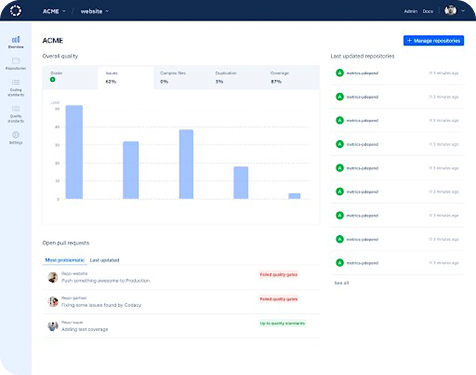
Cursor says it can plan or build software, understand the codebase, and support development at scale. Its documentation also highlights automated AI review on pull requests (multi-repo code intelligence), governance, and engineering standards. Qodo says its review agents scan pull requests for bugs, logic gaps, missing tests, risky changes, and security issues. Qodo is best positioned as an AI code review (testing), and quality platform. It is built around codebase context and enterprise code understanding — especially where repository search and cross-repo context matter. Sourcegraph Cody is built for large codebases and enterprise code understanding.
Listed Companies
Additionally, BFSI organizations are increasingly using AI to streamline processes, reduce costs, and improve customer experiences. Meanwhile (healthcare and life sciences are projected to AI tool reviews achieve the fastest compound annual growth rate (CAGR) of 26.94%), driven by the increasing complexity of clinical-trial documentation and the need to comply with stringent regulatory requirements. As compliance automation drives adoption (the functionality hierarchy is shifting from productivity to risk management), cementing security as the new killer feature. This acceleration aligns with EU mandates that require documentation of training data and governance controls. Google Cloud’s March 2026 rollout of Gemini 3.1 Pro with a 1-million-token window illustrates innovations that would be costly to replicate on-site.
On May 28, 2026, Anthropic shipped Claude Opus 4.8, building on Opus 4.7 with gains in coding, agentic tasks, vision, and reasoning, plus a new “dynamic workflows” capability in Claude Code for large multi-step jobs. Perplexity added a Max tier at $167/mo , annual billing,, bundling Perplexity Computer credits and Model Council access for heavy research users, its highest consumer plan to date. “Recent launches skew toward infrastructure and workflow control for agentic development rather than simple autocomplete. Cursor pushes end-to-end coding inside the editor with multi-file edits (reviews), and cloud agents, while Polygraph targets cross-repo understanding and durable session memory. Clusy extends the pattern into ML notebooks, automating experiments, data prep, and reproducible runs.”
We track vendor announcements (verify pricing changes directly on official pricing pages), and cross-check funding claims against primary sources. The build-an-app-by-describing-it category has quickly become the most-funded AI subcategory of 2026, with each tool pursuing a slightly different positioning. Notable tools we’ve tested and added to our directory this year include Lovable (full-stack app builder) — Bolt.new (in-browser full-stack agent), v0 by Vercel (UI-first code gen), and Devin (autonomous software engineer). It is the clearest sign yet that even flat-rate coding tools are shifting to metered AI pricing. It is available to Claude Pro, Max, Team, and Enterprise users and across the major clouds.
GitHub’s Copilot Enterprise includes a code referencing feature that identifies when generated code closely matches specific open source repositories, allowing developers to make informed decisions about licensing compliance. Several ongoing lawsuits, including the class action against GitHub, Microsoft, and OpenAI, continue to wind through the U.S. court system. The legal and regulatory framework surrounding AI-generated code remains in flux in 2026 — creating uncertainty for enterprises and developers alike.
AceCloud enables you to scale applications or train AI models more efficiently, intelligently, and affordably. Instead of merely considering monthly subscription costs, assess the per-seat price in relation to anticipated productivity improvements, reduced bug occurrences, and quicker onboarding. Robust VS Code extensions with seamless integration are offered by Copilot — Codeium, Tabnine, Cursor, Continue, and others featured in this list.
I Established an AI Business. This is Why Coding Jobs Won’t Be Eliminated by AI.
In October 2025 (enterprise-grade GitHub integrations were added to Google Cloud’s Gemini Code Assist), focusing on the 60.2% of teams that have code-review cycles lasting over a day. Native functionalities of AI assistants are embedded within Visual Studio Code and JetBrains IDEs — as opposed to being separate sidebars. According to NatWest’s operational data (once the accuracy surpassed 90%), AI code assistants transitioned from shadow testing to production pipelines.
- It generally attempts to produce a functioning outcome; however, if your instructions are excessively detailed and your architectural limitations are rigid, it might not strictly adhere to every technical guideline.
- Discover the productivity tool developed by a GitHub engineer and how AI enhanced the process of its development.
- Replit uses effort-based pricing, so simpler tasks cost less than complex ones.
- Clearly define ticket scopes with specific acceptance criteria; ambiguous tasks result in vague outputs.
- Learn how to split a big feature into AI agent tasks using planning, task scope, dependency order, tests, and review.Build a Safe Coding Agent LoopPrevent runaway automation.
- Major trends in the forecast period include automated code generation (ai-powered debugging), intelligent code review, predictive bug detection, adaptive documentation assistance.

This adaptability has enabled SMEs to accelerate the adoption of AI assistants, particularly in underserved markets such as Latin-American fintech and Southeast Asian e-commerce. On the other hand (small and medium-sized enterprises (SMEs) are experiencing significant growth), driven by the adoption of per-seat Software-as-a-Service (SaaS) plans. While the retail, media, and public-sector segments lag in adoption, they are still experiencing robust double-digit growth.
Smoothly collaborate with agents in Zed (editing files), navigating code, and running tools at the speed of the editor itself. Whether you’re beginning your AI journey or scaling existing solutions — our experts provide the guidance to maximize value from Claude Code while managing risks and ensuring sustainable adoption. The divide between organizations effectively leveraging AI coding tools and those struggling with adoption will likely widen through 2026 and beyond. Gartner predicts that by 2027, 75% of hiring processes will include certification or testing for AI proficiency, fundamentally shifting required skill sets Anthropic’s roadmap for Claude Code emphasizes enhanced enterprise controls, expanded IDE coverage, refined agentic capabilities, and deeper integration with development ecosystems.